Showing posts with label Honda. Show all posts

Hikes in Excise Duty Of Maruti SX4 , Honda Civic And Toyota Corolla

Hikes in Excise Duty Of Maruti SX4 , Honda Civic And Toyota Corolla
The government, in the Union Budget, had rised excise duty on SUVs with engine capacity of over 1500cc, length of more than four metres & ground clearance of 170mm or above, from 27percent to 30 percent.

In our market, cars like the Toyota Corolla Altis & Maruti SX4 also fall under these parameters & hence, suffered the excise duty rise as well.

Now, the Central Board of Excise & Customs (CBEC) has issued a statement of clarification saying, “It is clear that the afore cited motor vehicles (Maruti SX4, Honda Civic & Toyota Corolla Altis), which are known as Sedans, will attract the excise duty of 27 percent as applicable to large segment cars.”

Honda Motor Company Reveiled New 2014 Jazz

Honda Motor Company Reveiled New 2014 Jazz
This is the new Honda Jazz, which will make its comeback to India sometime in mid 2014. The Jazz was always a great hatchback; in fact, Autocar India Magazinne rated it as the best in its class. But it was let down by its price tag, & even a steep price cut didn’t help boost sales, forcing Honda to discontinue the model. However, with this new Jazz, Honda is looking to correct that. The new Jazz will come powered by the 1.5 litre i DTEC ‘Earth Dreams’ diesel engine as well as a 1.2 litre petrol engine. It maintains the basic quasi MPV hatch proportions of the earlier car.

The car you see here is the hybrid model powered by Honda’s 1.5 litre Atkinson cycle engine & Honda’s Sport Hybrid Intelligent Dual Clutch Drive (i DCD) gearbox that supposedly improves the car’s fuel efficiency by more than 35 percent & also features the best fuel economy of all the hybrid models in Japan. But, we doubt this engine & gearbox combo will make it to India. The conventional car will have subtle differences in styling such as differently designed wheels & tail lamps.

Honda will produce the car at its Tapukara plant, using a large amount of content locally to keep costs down. & since the Jazz shares its platform with the new City (due here in early 2014), it will definitely be more affordable than the earlier car. Honda doesn’t want to go & make that mistake again. The new Jazz’s wheelbase has increased by approximately 50mm (resulting in better rear legroom) but we expect the overall length to stay similar to that of the older car. The older car measured in at 3900mm & if Honda sticks to its sub four metre length, the Jazz, with its 1.2 litre petrol & 1.5 litre diesel engine, will fall under the definition of a small car, making it eligible for an excise benefit.

Honda was rumoured to be losing money on the earlier Jazz, leading to fewer models being produced than demand for the car, which meant long waiting periods & irate customers. Another factor was the introduction of the Amaze. Honda was anticipating huge demand for its Amaze compact saloon, & needed to concentrate its available resources towards the Amaze.
So, when the new Jazz does make its way here in 2014, it will be interesting to see where Honda positions it. Our sources say that it will slot right in between the Brio & the Amaze, which could possibly play in the Jazz’s favour. Good news for Honda Jazz fans in India.

The car’s grille now sports more aggressive, almost Civic like, headlamps & a sleeker grille as well. The new bumper is dominated by large air vents which add to the sporty appearance of the front, & on the side, there’s a prominent rising beltline, not on the previous car, which flows neatly into the new tail lamps. The headlamps come with metallic inserts. & there are turn indicators on the wing mirrors as well. The Jazz has always come with a spacious & extremely practical cabin, & this is a trait that will definitely be maintained.

Honda will produce the car at its Tapukara plant, using a large amount of content locally to keep costs down. & since the Jazz shares its platform with the new City (due here in early 2014), it will definitely be more affordable than the earlier car. Honda doesn’t want to go & make that mistake again. The new Jazz’s wheelbase has increased by approximately 50mm (resulting in better rear legroom) but we expect the overall length to stay similar to that of the older car. The older car measured in at 3900mm & if Honda sticks to its sub four metre length, the Jazz, with its 1.2 litre petrol & 1.5 litre diesel engine, will fall under the definition of a small car, making it eligible for an excise benefit.

Honda was rumoured to be losing money on the earlier Jazz, leading to fewer models being produced than demand for the car, which meant long waiting periods & irate customers. Another factor was the introduction of the Amaze. Honda was anticipating huge demand for its Amaze compact saloon, & needed to concentrate its available resources towards the Amaze.
So, when the new Jazz does make its way here in 2014, it will be interesting to see where Honda positions it. Our sources say that it will slot right in between the Brio & the Amaze, which could possibly play in the Jazz’s favour. Good news for Honda Jazz fans in India. 

Honda Motor Company Reveiled It's Brio-based MPV


Honda Motor Company Reveiled It's Brio-based MPV
Honda motor company has just revealed the sketches of its new mini MPV (Codename: 2NH) in Indonesia. Known as a ‘low’ MPV or LMPV, the sketch clearly shows a car with a comparatively low slung roof & an elongated wheelbase. Imagine a Maruti Ertiga with a lower roof & you won’t be too far off the mark.

The styling, however, is far more aggressive. The nose, especially the headlights & the grille, are clearly Brio like, but the car is sat on a block like base, put there in an effort to disguise the otherwise odd dimensions. Gaping large inlets are present in the front & rear bumper, the designers have used a kink in the window line to visually reduce the length of the car & big wheel arches have also been used to further accentuate this. The heavily flared wheel arch at the rear, with its central ridgeline, is in fact likely to be the talking point of this car. The sketch also reveals a very interesting ‘floating D pillar’ that hovers above the shoulder line. It however remains to be seen if this feature makes it to production.

Known as Asia’s MPV haven, Indonesia is the home to many MPVs. Toyota’s Innova is produced there, our own Maruti Ertiga is sold in that market & there are a raft of other MPVs on sale there too. Honda’s Low MPV (code: 2NH) will also be produced there first, Indonesia likely to be the launch market. India however will be next.

Details of the interior are sketchy, but the Brio’s dashboard is likely to be carried over. Insiders say there will be plenty of luggage space present even with all three rows being used by passengers.

Where Honda’s mini MPV is likely to score well too is in the engine department. Unlike Maruti’s Ertiga, that suffers from a bit of turbo lag owing to the small displacement 1248cc diesel engine used, this car will come powered by Honda’s 1500cc 100bhp motor that delivers instant throttle responses & plenty of torque. The 2NH is also likely to use an updated version of the City’s current 1.5 litre i VTEC petrol motor because it is unlikely to be less than four meters long.

With three rows of seats, Honda’s excellent packaging skills, aggressive styling & a strong diesel engine under the hood, Honda’s mini MPV will surely give the Ertiga a run for its money. Expect to see the car in India first at the Auto Expo in January 2014, with the production version hitting our shores towards the middle of next year.

Review and Test drive of new Honda Brio Automatic


honda brio automatic
Honda has greatly enhanced the user friendly character of its Brio hatchback with the launch of an automatic version that goes on sale on October 18. Instead of the CVT gearbox used in the Brio in Thailand & other markets, Honda has opted to equip the Indian Brio with a conventional five speed auto, driven by a torque converter. In fact, the gearbox is similar to the one in the City Automatic, but with different gear ratios.


honda brio automatic interior and steering
The Brio Automatic joins the handful of budget automatics available in the Indian market, & with the lack of strong competition, Honda believes that the Brio Auto could account for 5 10 percent of its total sales. However, the demand for the car will hinge largely on its price & fuel efficiency.

Whilst prices are not announced yet, we expect the Brio Auto to be around Rs 60,000 more than the equivalent manual version. In terms of fuel efficiency, the Brio Auto returns 16.5kpl in the Indian Driving Cycle (IDC)­ – 2.9kpl less than its more efficient manual sibling. This should make the Brio Auto around 10 15 percent thirstier than the manual in the real world. So is the convenience of an automatic worth the extra you will have to pay each time you fill up?

honda brio automatic gear box
Slip, or rather charge into Delhi traffic & the immediate answer is ‘Yes!’. The five speed auto is eager enough to make light work of the cut & thrust of rush hour and, at part throttle, the Brio Auto feels pretty responsive. It’s only when you stab the throttle wide open for a quick overtaking manoeuvre that the gearbox feels a bit lazy, taking a bit of time to kick down to a lower gear. However, you can work around this by snicking the lever down to D2 or even D1; this holds onto each gear just like in a manual & does not upshift automatically, even at the redline.

honda brio automatic rear view
On the open road, the Brio is surprisingly peppy & overtaking is pretty easy. This brings us to the 86.7bhp, 1.2 litre engine, which is the main reason for the Brio’s sprightly nature. This i VTEC motor is an absolute jewel that thrives in the upper reaches of the rev band.

The Brio was always a brilliant city car thanks to its perky responses, agile handling & compact dimensions. Now with the automatic version, it’s quite an ideal one.


honda brio automatic front view

Fact File
Engine
Fuel Petrol
Installation Front, transverse
Type 4 cyls in line, 1198cc
Power 86.7bhp at 6000rpm
Torque 11.11kgm at 4600rpm
Power to weight Front wheel drive
Transmission
Type 5 speed auto
Dimensions
Length 3610mm
Width 1680mm
Height 1500mm
Wheel base 2345mm
Ground clearance 150mm
Chassis & Body
Construction Five door, monocoque
Weight Full size
Wheels 14inch
Tyres 175/65 R14
Suspension
Front Independent, McPherson struts
Rear Non independent, torsion beam axel
Steering
Type Rack & pinion
Type of power assist Electric
Brakes
Front Ventilated discs
Rear Drums

Spy Pictures of new Next-gen Honda CR-V


Spy Pictures of new Next-gen Honda CR-V
Honda is readying the new generation CR V soft roader for an Indian launch as is evident from these pictures. Alert reader Vivek Sharma spotted this test mule in Noida.

The next generation CR V made its debut internationally in June, 2011 at the L.A. Auto Show, & is expected to be launched in India in early 2013.

The new CR V features an evolved look with quirky modern details & sound dimensions & proportions. At the rear, the company has retained the vertical tail light design of the current car.

Spy Pictures of new Next-gen Honda CR-V
We drove the car for our October 2012 issue & found that the interiors, just like the exteriors, have adopted an evolutionary change. The car has plenty of boot space & the large cargo compartment becomes enormous when you fold down the rear seat.

Honda will use an updated version of its 2.4 litre in line four engine that is smooth & responsive. The engine puts out 185bhp & 22.5kgm of torque & is mated to a five speed auto ‘box.

At launch, the CR V will only have a petrol option. Honda has said that a diesel engine is in the pipeline, but isn’t expected immediately.

Spy Pictures of new Next-gen Honda CR-V
Honda is expected to launch the car with a price tag of around Rs 28 lakh.

Honda had launched new City S A/T


Honda has added an another automatic variant to the City line up.

Buyers of the Honda City have now an option for automatic gearbox in the mid spec S trim level as well. Earlier, the automatic gearbox was available only on the top end V variant.  The City S A/T is targeted at buyers who want the convenience of an automatic gearbox at a lower price point.

The City S A/T lacks features found in the top end V A/T variant, such as turn indicators on the wing mirrors, chrome finish on the exhaust tip & door handles, fog lamps, cruise control & gun metal finish on the dash. The City S A/T also comes only with five spoke alloys instead of the ten spoke ones found on the V trim. All automatic Honda Citys come with a five speed automatic transmission with paddle shifters.

The only other car in the segment that comes with an automatic gearbox in the mid spec trim is the Skoda Rapid. It comes with a six speed auto in the Elegance trim & is priced at Rs 8.42 lakh (ex showroom, Delhi).

The City S A/T is priced at Rs 9.09 lakh (ex showroom, Delhi).

Honda has revealed the new Accord


New Honda accord front view
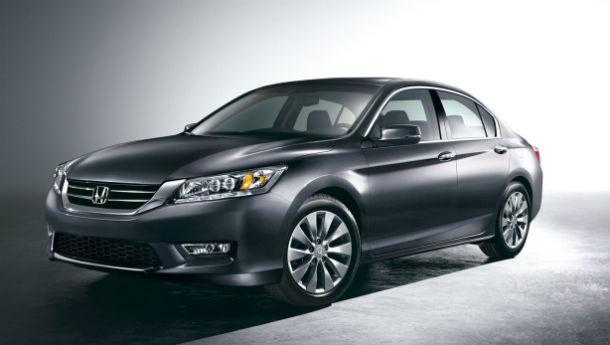
Honda has released some official photos of new Honda Accord saloon.


New Honda accord front bumper
As seen from the current designs the Accord gets many styled tweaks but overall this new design is very much on the conservative side except a strong character line that runs on the sides. As seen from the picture the new Honda Accord will get LED daytime running lights also.


New Honda accord front lights
The new Accord will have more interior space thanks to the clever packaging. There is no update on the engine choices but we expect them to be carried over from the current car.


New Honda accord rear lights and brakes
The new Honda Accord will compete with the likes of the Hyundai Sonata, Toyota Camry, Skoda Superb and Volkswagen Passat. Expect Honda to launch the new Accord in India the next year.


New Honda accord rear view
New Honda accord tires


Honda City AT VS Ford Fiesta AT


Honda city AT and Ford Fiesta AT interior
Not too long ago, automatics were rather unpopular on any car this side of a Skoda Laura. The general perception of them being more expensive than their manual cousins & less fuel efficient didn’t sit too well with buyers in such a price sensitive segment. Old school autos also ate into big chunks of the engine’s power & were about as much fun to drive as a bar of soap.


Things have changed though – our increasingly crowded streets & gridlocks mean that we spend more time changing gears than actually driving.

Funky dashboard complements the sporty exteriors of the Fiesta. Plastic quality is inconsistent though
Also, the modern automatic gearbox has come a long way from the slushboxes of old. Take for example Ford’s new Fiesta – it’s being offered with a twin clutch automatic – a thoroughly up to date gearbox. Ford believes it is more fuel efficient, shifts gears more smoothly & gives you more driving pleasure.

But we simply can’t take Ford’s word, can we? That’s why you see the Honda City auto here. It’s been the de facto choice in this segment since its launch in 2009 & stiff competition from Volkswagen & Hyundai didn’t ruffle its feathers either. The City has a conventional torque converter & has only five gears against the Ford’s six. The City is also just Rs 4000 more than the Fiesta’s Rs 9.7 lakh price tag.

Design & engineering

City's high driving position like most hondas is spot-on.
Visually you will find no difference between the manual & automatic Fiestas – you get the same swept back headlamps, distinctive grille & bold creases that add up to a sporty shape. The tail section looks too high in profile though & is a bit ungainly. The Fiesta’s biggest brag is its dual clutch transmission, a first in this segment. After the recent facelift, the City got some minor cosmetic changes. The front grille now gets a chrome finish; there’s a new rear bumper & different taillights as well.


Interiors

Fiesta has a 6-speed dual-clutch gearbox.
The Fiesta’s dashboard is nicely textured with soft touch materials but some plastics lower down look shiny & cheap; some of the switchgear too doesn’t feel premium either. What lets the interiors down is the rear seat, which simply can’t match the City for legroom. Headroom too is not as generous & the small rear windows add to the cooped up feeling. The Fiesta’s driving position is superb, the steering wheel, gearlever & seat are perfectly placed & the pedals are well spaced.

The City’s front seats are good, but not as nice as the Fiesta’s. Sure, there’s lots of space & the front seat cushions are generous, but the driving position isn’t anywhere as snug as the Ford’s. Where it does score over the Ford though is by having slightly better rearward visibility, & the rear seats are decidedly better. There is a generous amount of width & legroom & you feel less hemmed in here. The City now comes with light brown fabrics as opposed to the beige you used to get in the earlier car. The dials now get a cool blue backlighting & the chrome rings on the AC controls look nice.

The Fiesta is the better equipped car & has some unique features. There’s voice activation for the audio system, Bluetooth connectivity, climate control & auto folding mirrors, so it’s amazing that Ford has priced it at par with the lesser equipped City.

Engine, gearbox & performance

Honda City uses a conventional 5-speed auto
So how does the Fiesta’s hi tech gearbox perform in the real world driving conditions? Slot the gearlever in ‘D’ & you will find the Fiesta jumps off the line with enthusiasm. The dual clutch box feels good in traffic & you find it does a good job of selecting the right gear for the right situation. The gear ratios are shorter than the City’s & this helps with quick responses in the cut & thrust of city traffic. There is none of that gearshift jerkiness usually associated with twin clutch units. For ambling along in traffic, the Fiesta is brilliant & smoother than the City. The trouble is, as soon as traffic thins out, the Fiesta struggles a bit. This is mainly down to the engine’s lack of grunt – most of the power made by the Ford engine is near its redline so you really need to rev it to get the best out of it. The mid range is a bit flat as well & lacks punch.

The City’s torque converter transmission is not as smooth & power delivery can be abrupt at times. This makes it slightly tricky to drive smoothly in stop start traffic. If you do drive on the highway though, it’s the City that has the clear advantage. This is mainly down to the strong 118bhp engine & the quick shifting five speed auto. The City’s motor is free revving too. Our VBOX figures reflect this. The Fiesta takes 13.80sec to reach 100kph which makes it a second slower than the City. Even in gear, the City proves to be much quicker than the Fiesta.

The City’s engine/gearbox combo is more fun to use & in manual mode, the gearbox holds on to a gear & doesn’t upshift unless you pull the paddle (the Fiesta doesn’t have paddle shifters). The Fiesta doesn’t come with a manual mode; instead you get an ‘L’ mode which gives you more engine braking & the ’box stays in the lowest gear possible.

Ride & handling

If Honda is famous for its engines, Ford is equally well known for its driving dynamics. & the Fiesta, fine tuned to Indian tastes, is no different. Now, keen to appeal to a wider customer base, the car has been tuned to erase every bump & broken patch Indian roads can throw at it. & the taller springs & tuned dampers deliver the desired effect. The ride quality over poor sections of the road is simply superb. The Fiesta blots out most road noise over poor sections & the car never feels floaty at high speeds.

The City feels distinctly second best on the ride & handling front. The same section of road seems worse for wear, every poorly paved patch on the road gets highlighted & this is especially true at low speeds. The suspension is also much more audible than the Ford’s. But once speeds build, the City manages to tackle poor sections with less noise filtering through to the cabin. The City also feels the more nimble of the two. While its light steering fails to inspire confidence & feels vague at speed, it’s a delight in urban traffic. The steering of the Fiesta is well weighted & considerably more direct.

Fuel efficiency

Ford claims the Fiesta automatic to be very fuel efficient & our test confirms this. In town, the Fiesta returned a impressive 10.3kpl as against the City’s 9.5kpl, while on the highway the Honda’s tall gearing means it returned slightly better figures than the Ford.

Used Santro and City are the top sellers from Mahindra First Choice.


used old hyundai santro at first choice
Used Hyundai Santros & Honda Citys, from the B  & C segments respectively, are currently the best selling models from Mahindra FirstChoice Wheels (MFCW) outlets. These Mahindra outlets offer used cars from various brands, so you can expect to see a Tata Nano sitting alongside an Audi A4 in a First Choice outlet.  

Prices range from Rs 1 3 lakh for a used petrol Santro (2001 10 model) while the second generation petrol City (loosely known as the ‘Dolphin’ 2004 05 model in the used car trade) can be yours for Rs 3.5 4.5 lakh. The C class Mercedes 2002 03 petrol & diesel models can be bought for as little as Rs 6.5 to Rs 7 lakh. However, luxury cars constitute only 3 percent of total sales.

Interestingly, just like in the new car market, Mahindra FirstChoice has witnessed a shift in customer demand from petrol to diesel cars over the last 6 to 8 months.

used old honda city at first choice
“Availability of diesel cars is very low as we are unable to source good cars due to the sudden shift in customer preferences. Those who possess diesel cars are not keen to part with them. New diesel technologies will take about three years to come into the market & that is when more diesel cars will be available at our outlets,” says Sharad Agarwal, National Head Franchisee Operations.

About 60 percent of the cars sold at the outlets range from 3 to 5 years in age with 20 percent in the 0 to 3 year age bracket, with the balance in the 5 plus year category out of the 25 to 30 cars on display at each outlet.

used old hyundai santro and honda city at first choice
Used cars are sourced through new car dealers, online networks, through leasing & corporate tie ups & walk in exchange of cars. FirstChoice offers 95 percent financing facility to customers through its in house finance arm Mahindra Finance, & partnerships with financial institutions.

FirstChoice expects to sell 30,000 cars in FY’12 through 150 outlets primarily in tier I & II towns, with a sales target of one million cars & 300 outlets by 2014.  

Two wheeler prices may go North


new honda cb twister
In a show of insufficient support to India’s flourishing private sector, the Government Of India’s Union Budget 2012–13 proposes hiking two wheeler excise duty from ten to twelve percent; an inexplicable move that can only trigger price hikes across the industry, as two wheeler manufacturers are left little choice but to pass their increased cost burden on to buyers.

The government has meanwhile also failed to provide relief to what are already sky high import duties levied on imported motorcycles brought in as completely built units (CBU), semi knocked down (SKD) &ncompletely knocked down units (CKD), unreasonably choosing to keep duty unaltered for these products, with 60 percent duty absorbed by the Government on every CBU model, &n30 percent for all CKD bikes.

New Honda CBR150R Bookings are now open

new honda bdr150r bookings
Honda Motorcycle & Scooter India (HMSI) has commenced bookings for the CBR150R, simultaneously beginning production of the bike at Manesar.

The Japanese two wheeler major aims to roll out a first batch consisting of approximately 750 bikes by the end of March 2012. The CBR150R is powered by a 149.4cc, four stroke, single cylinder engine which delivers 18bhp. The bike features a six speed gearbox & will be offered in four colours.

Though pricing remains undisclosed, we expect the latest CBR bike to be attractively priced within Rs 1,20,000. Meanwhile, Honda sales counters continue to bustle with 43,000 bookings accumulated for the new Dio scooter, in the six weeks since its launch.

Honda has resumed the normal production


honda siel brio plant in Noida
Honda Siel, the arm of Honda Motor Co in India have resumed normal car production after witnessing the lower output since November last year due to Thailand floods that resulted a shortage in supply of components.

Honda has started acquiring the critical components from Japan & China in order to normalize the production at Greater Noida plant. The Japanese manufacturer is aiming to manufacture 370 cars in a day in a 2 shift operation which will increase to 440 cars much soon.

As many as 1500 units of the new updated Honda City have been rolled out of Greater Noida facility. Production of the recently launched Brio hatchback has also resumed while Jazz will start rolling out by end of this February.

Honda motors had stopped the production of new Brio last month due to the shortage in supply of many critical components.

New upgraded Dio Scooter launched bye Honda


new honda dio scooter launched
Honda Motorcycles & Scooters India has launched the new Dio scooter. Dio now have a updated 110cc engine & Honda’s global moto styl.

New  Dio is powered by the identical 110cc engine that powers the Honda Activa and Aviator scooters. It develops 8bhp at 7,500rpm (1bhp more than the outgoing model) and 0.88kgm of torque at 5,500rpm. The motor is equipped with a latest cutting edge techno which help Dio to achieve a mileage of 55kpl, up by 15% than earlier Dio.

In addition, Dio also have Honda’s Combi brake feature which ensures the improved braking efficiency & riding stability. It is also the first Indian scooter that sport tubeless tyres. Other updation is increased leg space & wider seat for comfortable ride experience. Honda has tweaked Dio’s overall styling also; it get new frontal design which, according to Honda, “expresses dynamic & youthful moto scooter look”, a new 3D emblem & a elegant tail lamp.

Speaking on the occasion,Mr. NK Rattan, VP  Sales and Marketing of HMSI said, “The increased convenience & comfortable riding position of the new Dio will appeal to both style conscious young males & females. It is very affordable & it will be available by February end.”

New Dio is priced at Rs 42,362 (ex-showroom, Delhi) & is available in  5 colours i.e. sports red, matt axis grey, pearl sunbeam white, candy palm green & leblon violet.

Autocar India Awards 2012


                                                                                                  Car of the Year – Maruti Suzuki Swift

maruti swift car of the year
The Swift won our Car of the Year in 2005. And it wins it yet again this time. Though the new Swift looks exactly like the old model, this car is a grounds-up new generation of the Swift. This model is based on an all-new platform and is now both longer and wider. The Swift’s interior styling, which is heavily borrowed from its Kizashi sibling, is now plusher.

The car is now sportier to drive and the 1.2 K-series petrol gets variable valve timing (VVT) to bump up power to 86bhp. The 74bhp 1.3 diesel Multi-jet engine remains largely unchanged but the carmaker’s effort to make the cabin a quieter place is evident. Maruti Suzuki has taken an already good car and made it even better by ironing out the flaws in the older car. Despite stiff competition this year from among nearly all the world’s majors, Maruti Suzuki’s new Swift shows the competition a clean pair of heels to pick up the prestigious award of the Bloomberg-UTV Autocar Car of the Year 2012.

Bike of the Year – Honda CBR250R

honda cbr 250r bike of the year
The Honda CBR250R came like a breath of fresh air for Indian motorcycle enthusiasts long stuck between underpowered city commuters and horrendously expensive imported superbikes. Here was a motorcycle that offered great styling, zippy performance, street-friendly handling with a price tag that did not need you to mortgage your house. The CBR250R has all the big bike visual cues with its VFR 1200 inspired headlamp and CBR1000RR fairing. It ticks all the right boxes in the design and styling department. For its combination of style, performance, streetfriendly handling as well as advanced technology at a decent price, the Honda CBR250R is the Bike of the Year.

Compact Car of the Year – Maruti Suzuki Swift

The Swift was already a favourite in the competitive compact car market. And the new Swift promises to continue Maruti Suzuki’s winning streak. Though the new Swift looks the same as the old car, it is a completely new model built on a new platform. Ride and handling have been tweaked and they are even better now. The new Swift is larger, more spacious, delivers better performance, has better driver dynamics and gives you enhanced fuel economy. The Swift, always a great car, is now even better and is quite definitely the Best Compact Car of the Year.

Mid-size Saloon of the Year – Skoda Rapid

Under the skin the Skoda Rapid is a VW Vento. However, dig deeper and the Rapid proves to be much more than a Volkswagen clone. Skoda has ironed out many of the Vento’s shortcomings. The diesel engine is more linear but just as punchy, the shorter geared petrol now works much better and ride and handling are much improved as well. Spacious, fast, frugal, reasonably well-built and good value, the Rapid has a lot going for it. In fact, it actually beats its twin to win the crown of the mid-size saloon Car of the Year.

SUV of the Year – Mahindra XUV500

The XUV500, designed and developed completely in-house, is a quantum leap forward by Mahindra & Mahindra – it’s the company’s first serious attempt at developing a global product. The price at which Mahindra has launched the SUV makes it shattering value-for money. You get a lot of car for the price. You get a fantastic-looking SUV that dominates the road with its presence. An excellent package makes the XUV500 a worthy winner.

Winners for the rest of the categories are as follows:

Best Styling & Design – Hyundai Verna

Best Value for Money – Mahindra XUV500

Best Variant of the Year – Chevrolet Beat Diesel

Best Driver's car – Ford Fiesta

Manufacturer of the Year – Toyota

Technology and Innovation award –  Audi A8

Sub-compact car of the Year – Honda Brio

Best Compact car of the Year – Maruti Suzuki Swift

Best Saloon car of the Year –  Skoda Rapid

Best Executive Saloon of the Year – VW Jetta

Luxury Saloon of the Year – Audi A6

SUV of the Year – Mahindra XUV500

Luxury SUV of the Year – BMW X3

Best Automobile Ad of the Year – Volkswagen Jetta 'Flyboy'

Bike of the Year 2012 – Honda CBR250R

Premium Bike of the Year – Kawasaki Ninja 650R

Import Bike of the Year – BMW K 1600 GTL

Green Car Award – VW Passat for BlueMotion technology

Man of the Year – Pawan Goenka

Viewer's choice award - CAR – Mahindra XUV500

Viewer's choice award - BIKE – Honda CBR250R

Honda Brio vs Hyundai i10

The Hyundai i10 is easy to drive, has a strong fuel-efficient engine, a well-appointed cabin and thus a strong favourite in the small hatchback class. With regular revisions and facelifts it has managed to distance itself from the rest.
The Honda Brio though is keen on upstaging the Hyundai with its premium positioning. Both have 1.2-litre engines and what the Honda wins with size, the Hyundai claws back with content. With less than Rs. 20,000 separating the top-end versions, which car should you put your money on?
Design and engineering
The bigger Brio is 25mm longer and 85mm wider than the i10 and these dimensions give it a wide and squat stance, while the high-mounted headlights and a low grille give it a distinctive look. The 14-inch wheels and the sharply rising window line gives the Brio a very pitched-forward stance. The rear of the Brio, the full-glass tailgate looks quite funky and the fit and finish of the bodywork on the whole looks and feels great.
The i10’s looks on the other hand are not as sporty as the Brio’s, but its crisp detailing like the hexagonal grille and sharp headlamps mean it still looks quite fresh. The i10’s tall profile also points towards a well-packaged cabin and decent luggage space. A deeper floor in the boot also means larger bags can be squeezed in.
The Brio’s boot is comparatively small but once you get past the high load lip (for better chassis stiffness) you will be surprised how many bags you can load into it.
Under the skin both the cars are similar with a front-wheel drive, electric power steering systems, transverse motors and independent front suspensions with torsion beams at the rear. 
Interiors
Step into the Brio and you will be surprised by the amount of passenger room on offer, which is more than many bigger hatchbacks. The driver gets a fantastic view and the driving position is spot on.
The i10 is tighter on the inside in comparison, but is reasonably spacious, with decent headroom. The i10’s high-set driver’s seat, though good for visibility, lacks thigh support and, like in the rear, the cushions feel a touch too hard.
The dashboard on the Brio is well built but it is clear where the fat has been trimmed. The absence of a full centre console and plastics and the colours on the dashboard don’t do the Brio any favours.
The i10, in comparison, has a fuller dashboard with a neatly laid air-con and music system and the dash-mounted gearlever leaves some storage between the front seats. The top-end i10 Asta offers you more features like Bluetooth connectivity, CD player, parking sensors and rear wash and wipe as standard.
Engine, gearbox and performance
The Brio uses the same 1.2-litre i-VTEC, single-cam motor as the bigger Jazz albeit in a milder state of tune in the interest of economy. It makes a healthy 88bhp and is compliant when you want some extra performance. However, it does lack some low-speed punch and the slightly taller first, second and third gears also mean you have to downshift more frequently. That said, the Honda motor is easily the more refined of the two.
The i10’s Kappa2 motor, on the other hand, is much more responsive and the car jumps off the blocks with just an inch of throttle travel. Though the motor will rev till its 6700rpm redline, the problem is, past 4500rpm, the engine feels strained and doesn’t pull as cleanly to the top as the Brio.
Flat out, the i10 dispatches 100kph in 12.04sec, while the Brio takes 12.47sec to do the same. It’s same story with the in-gear acceleration times; the i10 is a nose ahead in the third and fourth-gear slogs
Ride and handling
As expected, both cars with their compact dimensions and light steering are easy to drive in the city. The Brio is fairly pliant and bad roads are soaked up quite well. The i10’s suspension, on the other hand, isn’t as well sorted as the Brio’s. It’s fairly comfortable at slow speeds but up the pace, especially on a bad road and the i10 doesn’t feel as settled as we would like, and this bobbing motion is enhanced when the car is loaded up.
But when in the mood, the Brio’s the one to choose. With its willing top-end performance, confidence-inspiring brake pedal and eagerness to tackle corners, the Brio feels a special little car. The steering has a slight dead zone at the straight-ahead position, but once you push the car harder and load up the suspension the Brio displays a poise, balance and confidence rarely found in a car of this class.
The i10 on the other hand makes you think a bit before pushing on – it’s got too much body roll, loses its poise quite easily and those ultra-thin, 155-section tyres run out of grip alarmingly early.
Fuel efficiency
Despite having 9bhp more, the Brio is slightly more efficient than the i10. City figures of 12.6kpl and 17.0kpl and a highway number of 11.7kpl and 16.0kpl for the Brio and i10 respectively reveal a small, but crucial victory for the Honda. Both cars though have 35-litre tanks which somewhat limits their range.
Verdict
The i10 is a thoroughly engineered product with good performance and practicality. Its appeal has always been its versatility and this still holds true. The top-spec i10 is superbly kitted and sets the standard for equipment and features in this class of car. It is decent value for money and promises a hassle-free ownership experience. The i10 though is nowhere near as fun to drive as the Brio and can’t match it in key areas like passenger comfort and ride and handling. The interiors are well built but point to a pared-down car. However, you can’t get away from the fact that the Brio is and feels like a car in a higher class and this big-car feel for small-car money is what clinches it for the Honda.

Facelifted Honda City launched


Honda India has launched its updated City in India.
The new City gets a host of cosmetic upgrades such as an electric sunroof, chrome-plated front grille, updated front bumper, 10-spoke alloy wheels and turn indicators on rear-view mirrors. The saloon also gets cruise control now.
 
Safety features on the new City include Dual front SRS airbags, ABS with EBD and Brake Assist. The updated City comes in five variants with base being Corporate, E, S, V and V Exclusive with the last two variants offered with automatic transmission option.
 
Prices for the refreshed Honda City are:
Corporate - Rs 6.99 lakh
City E - Rs 7.7 lakh
City S - Rs 8.2 lakh
City V (Manual) - Rs 8.7 lakh
City V (Auto) - Rs 9.74 lakh
City V (Manual) with Sunroof - Rs 9.5 lakh
City V (Automatic) with Sunroof - Rs 10.22 lakh

Honda's new AC-X saloon concept


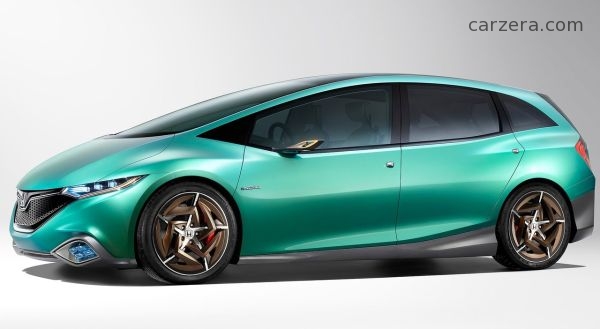
Honda has also revealed the AC-X saloon concept at the Tokyo Motor Show. The Japanese manufacturer describes this concept as a next-generation plug-in hybrid. The AC-X (Advanced Cruiser Experience) concept is between the Civic and Accord in size.
Honda says the concept “offers a comfortable and enjoyable driving experience in urban and long-distanc
e motoring”. To that end, the concept is offered with an ‘automatic driving mode’ for more relaxed driving, with an ‘engine drive mode’ on offer for more spirited driving.
Specifically designed for long journeys, the AC-X gets the two joystick steerin
g controls that are common to all of Honda's Tokyo show cars. Dubbed ‘twin lever steering’, the system is said to reduce the physical stresses of driving, allow for an auto-pilot setting and more efficient auto-recharging in electric vehicles.
It’s not something we’ll see in the near future, but Honda has tested it in an old Formula One car, resulting in significant improvements in lap times. The four-seat AC-X concept showcases particularly advanced aerodynamic progression including ‘wheel diffusers’ that help contribute to the impressive 0.21cd drag coefficient.
Expect to see this less-cluttered, more striking design language arrive in future Honda production cars uncorrupted from these concepts, though you will still see different designs and types of Honda model being produced for individual countries.
Yoshikazu Kigoshi, general manager for Honda research and design, was open about the fact that Honda will “uphold the categorisation we think is necessary for markets as different as USA, Japan and Europe.”
The firm revealed last month that it intends to have a plug-in hybrid on sale in limited numbers in China, Japan and US in 2012.

New Honda CR-V revealed


These are the first official images of Honda’s all-new CR-V.
Honda had released the first official picture of the CR-V concept last summer, and was due to unveil the production car at next month's Los Angeles motor show. However, the latest images appeared without explanation on the Honda’s Japanese website at the weekend.

The CR-V is based on an all-new platform. The most prominent changes are at the front, where the CR-V features a wraparound lower front bumper that is better integrated into the rest of the front fascia than on the current car.

The three-bar horizontal front grille is also much more dominant than the current CR-V’s, with slimmed-down headlights flanking it on either side. Honda claims the front-end styling changes result in much improved aerodynamics over the current car. Sculpted bodywork features on the sides, which also get more pronounced side sills. The large alloy wheels featured on the concept have been exchanged for more practical-looking variants.

At the rear, the CR-V will retain the vertical light design of the current car. Honda is also claiming an all-new, more spacious interior with a lower floor for improved load-carrying ability. Engine details are still scarce, although improved efficiency and fuel economy are promised.
The current CR-V is available with a 2.0 or a 2.4-litre petrol engine with either two or all-wheel-drive options. Expect the new CR-V to hit our shores during second half of 2012. 

Swift vs Jazz


Swift vs Jazz

The Jazz had it all, but it never sold as well as it could have. Honda broke the cardinal rule for pricing and the Jazz found too few takers when it was launched at a saloon car price. That was then. Today however, it sits bang in Suzuki Swift territory. Problem is, the new Swift is substantially better than the car it replaced. So which one is it, brilliant Jazz or amazing Swift?

New CR-V Patent Drawings Leaked


Here are some leaked patent drawings of the all-new CR-V.
Honda had presented a CR-V concept in July and the production version sticks to most of the concept’s styling. The wide upper grille, swept headlamps and a stylish-looking D-pillar have all been carried over. The wheels, however, have been toned down for a more civilized effect.

Twitter Delicious Facebook Digg Stumbleupon Favorites More