Showing posts with label SUV. Show all posts

Bentley Motors Confirmed To Launch An SUV In 2016


Bentley Motors Confirmed To Launch An SUV In 2016
Bentley has confirmed that it is to build an SUV. The new model line will be built in Crewe & will go on sale in 2016.

This move will create more than 1,000 jobs at Bentley’s Crewe plant.

The upcoming model, which will become the firm’s fourth model line, will be a “thoroughbred” Bentley, which will represent the brand’s hallmarks of "luxury, performance, quality & craftsmanship”. Bentley claims it will be the most powerful SUV on the market.

The announcement of a production SUV follows the Bentley EXP 9 F concept, which was shown at the 2012 Geneva motor show. It is likely to share its platform with the next generation Audi Q7 & Porsche Cayenne.

David Cameron, who was present at the announcement said, “This £800 million investment & a thousand new jobs from Bentley is fantastic news for both Crewe & for the UK as a whole. It is another important milestone in strengthening our economy.


“One sector that we know is sprinting ahead in the global race is our booming automotive industry. One vehicle rolls off a production line somewhere in the UK every 20 seconds & we have just launched the government’s Automotive Industrial Strategy to help continue this success for years to come.

“I am delighted that Bentley will be building their new vehicle here, not only creating a thousand jobs, but safeguarding many more, as well as increasing training opportunities for highly skilled apprentices.”

Volkswagen group boss, Martin Winterkorn said: “The Volkswagen Group believes in the UK as a competitive location for industrial production. Bentley fans all around the world are looking forward to the brand’s first SUV. Together we will make this new Bentley another true Bentley – powerful, exclusive & successful.”

Mahindra Quanto registers more than 10,000 bookings


Mahindra Quanto registers more than 10,000 bookings
Mahindra has announced that it's recent SUV Quanto has received 10,000 bookings within 2 months. Mahindra has also announced that it will be ramping up capacity at its Nashik plant & will now produce 3,500 units every month instead of current 2,500 units.

Commenting on the response to the Quanto, Pravin Shah, chief executive, automotive division, Mahindra & Mahindra said, “We are delighted that the Quanto has received over 10,000 bookings in a span of two months & we are thankful to our customers for this overwhelming response. This strengthens our belief that the Quanto will create a new category within the SUV segment with its unique value proposition. We are confident of meeting the demand for the Quanto & are in the process of ramping up our production capacity at Nashik towards the same.”

The Quanto was designed & developed completely in house by Mahindra on the Ingenio platform, & is powered by a 1.5 litre mCR100 engine that puts out 100bhp.

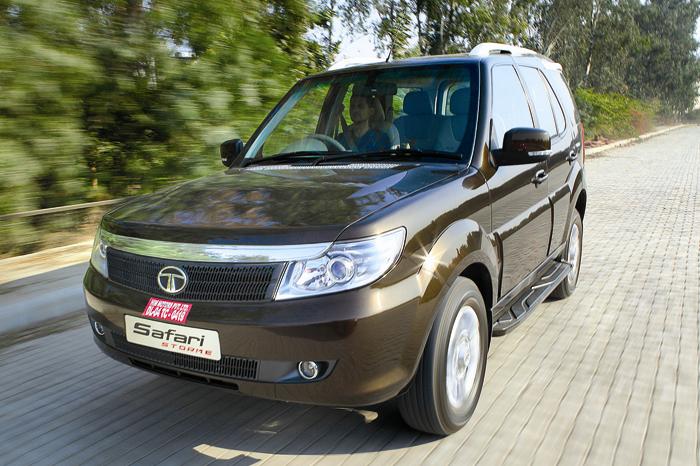
Review and Test Drive of Tata Safari Storme


Tata Safari Storme front view
When you first look at the new Safari Storme, you are immediately struck by how, even 14 years after its launch, Tata seems to have made barely any changes to the exterior. Alterations to the nose & rear suggest that it’s not much more than a facelift. However, that misconception gets blown to dust the moment you drive it. Once you’re behind the wheel, you realise just how much of an improvement the new Storme is over the previous Safari. It feels better built, it’s far more refined, it rides really well & the interior too feels a generation ahead.

Tata Safari Storme steering and interior
The most obvious changes are to the front, where the slim, wide grille (capped with a thick chrome strip) undercuts the sharp looking headlights in a nice, stylistic touch. Move to the side however & the Storme looks exactly like the old Safari. New cladding for the doors & wheel arches can’t hide the fact that the glass house is identical, the doors are similar & the A, B & C pillars are the same as well.

At the back, the tailgate mounted spare wheel has now been moved under the floor. The result is a cleaner rear profile with a new set of tail lights.

Tata Safari Storme front seats
On the inside, the overall improvement in quality all around is immediately evident & almost nothing of the old car is carried over. The chrome door handles & leather seats add a touch of luxury, as do small details like the chrome on the gearlever & the flock lining in the glovebox.

Just like the previous generation Safari, the Storme has excellent seat comfort and, once you haul yourself in, you are rewarded with a commanding seating position & a delightfully spacious & airy cabin. The front seats are large & very well bolstered, whilst the rear bench is supportive too.

In stark contrast, the third row is far from comfortable or practical. The tiny, foldable jump seats are only useable on short journeys, at best.

Tata Safari Storme rear and dicky space
On the mechanical front, the Safari Storme uses an updated version of the 138bhp Dicor motor, which Tata now calls VariCor, because of the use of a variable geometry turbo. This 2.2 litre common rail, direct injection motor uses double overhead cams, hydraulic valve adjusters & sixteen valves to breathe better.

The overall level of refinement is much better now with an engine that is quieter throughout its rev range, & a cabin that feels particularly well insulated from the outside.

Tata engineers have managed to shave around 75 kg off the old car thanks to a lighter chassis, but this hulking two tonne SUV is a bit lethargic off the line; a result of its weight & lack of low end torque. You need to keep the engine above 1800rpm, after which the Storme picks up the pace with a fair amount of enthusiasm. The mid range is quite punchy & cruising is quite effortless, which suits the Safari’s role as a long distance cruiser.

The clutch is reasonably light & the gearbox has been improved with shorter throws, but the shift still feels a bit soggy & vague.

Tata Safari Storme rear view
The Storme sits on a shortened version of the Aria’s hydroformed X2 chassis & maintains the previous Safari’s 2650mm wheelbase. As a result, the Storme’s chassis is approximately 50 percent stiffer & 35kg lighter than the old Safari’s outdated ladder frame.

The ride comfort is simply fantastic. The Storme coasts over bumps & broken roads like a freight train, flattening out even the largest of potholes. The suspension, also carried over from the Aria, is on the softer side, & hence there’s a fair amount of pitching & heaving over uneven surfaces.

The Storme retains the old Safari’s comprehensive four wheel drive system that includes a low range & a limited slip differential. The system is easily engaged by using a central console mounted dial & this allows the big Tata to tackle medium to difficult sections.

The new Safari Storme comes equipped with features like ABS, remote locking & an audio system with Bluetooth connectivity standard across the range. In fact, the Rs 9.95 lakh (ex showroom, Delhi) that Tata is asking for the base Storme LX may be considerably more than the old LX, but the equipment is on par, if not better than, the old mid level EX.

Unusually, the top end VX versions (Rs 12.5 lakh for the 4x2) no longer get the reversing camera (there’s just parking sensors) or DVD player as they did before.

The Safari Storme, then, comes across as a quantum leap ahead of the previous Safari. It’s well equipped, refined, better built & comprehensively updated. & with prices starting from Rs 9.9 lakh for the base 4x2 model & going to Rs 13.7 lakh for the fully loaded 4x4 option, it’s great value for money. Also, as a long distance cruiser, nothing can quite beat it for the money. The only grouse is that, even after 14 years, Tata hasn’t got around to changing the ageing body completely.


Fact File


Price Range (in lakhs)*
Ex-showroom priceRs 9.95L to Rs 13.66L (Ex-showroom, Delhi)
Engine
FuelDiesel
InstallationFront, longitudinal
Type4-cyl, in-line, 2179cc, common-rail, turbo diesel
Bore/stroke85.0/96.0mm
Power140bhp at 4000rpm
Torque32.63kgm at 1700-2700rpm
Transmission
Gearbox5-speed manual
Dimensions
Length4650mm
Width1965mm
Height1922mm
Wheel base2650mm
Ground clearance200mm
Chassis & Body
Tyres235/70-R16
Suspension
FrontIndependent, double wishbone, coil springs
Rearnon-independent, 5-link with coil springs
Brakes
FrontVentilated discs
Reardiscs


Nissan launched new Evalia MPV


Nissan Evalia MPV front view
Nissan has launched the Evalia MPV at a price range of Rs 8.49 9.99 lakh. Available in four trim levels, the Evalia will be powered by a 1.5 litre dCi diesel motor churning out 84bhp & 20.4kgm of torque.


Nissan Evalia MPV interior and steeringPriced at Rs 8.49, the base XE variant gets basic features like power steering with tilt adjust, electric wing mirrors, a single DIN music system with two speakers & aux connectivity, & a multi information display. The next trim level XE+ costs Rs 8.92 lakh. It gets all the features of the base XE & also comes with driver & passenger airbags.


Nissan Evalia MPV rear seating and space
The third variant, the XL is priced at Rs 9.49 lakh & apart from the features of the XE+, it also gets remote controlled central locking, power windows, a 2 DIN music system, & air con vents for second row passengers. The top end XV, in addition to the features of the lower variants, gets fog lamps, an intelligent key, reverse camera, & a colored multi information display. The XV retails at Rs 9.99 lakh.


Nissan Evalia MPV space
All the variants of the Nissan Evalia come equipped with ABS & EBD as standard.


Nissan Evalia MPV rear view
The Evalia’s chief competitors include the Toyota Innova, Mahindra Xylo & Maruti Ertiga.

Nissan Evalia Variants Prices
XE Rs 8.49 lakh
XE+ Rs 8.92 lakh
XL Rs 9.49 lakh
XV Rs 9.99 lakh

Mahindra Xylo Variants Prices
D2 Rs 7.5 lakh
D4 Rs 7.92 lakh
E4 Rs 8.3 lakh
E4 ABS Rs 8.53 lakh
E8 ABS Rs 9.33 lakh
E8 ABS Airbags Rs 9.71 lakh
E9 Rs 10.52 lakh

Maruti Ertiga Variants Prices
Ldi Rs 7.3 lakh
Vdi Rs 7.95 lakh
Zdi Rs 8.35 lakh
Zdi Option Rs 8.6 lakh

Toyota Innova Variants Prices
E (7 seater) Rs 9.94 lakh
E (8 seater) Rs 9.99 lakh
G (7 seater) Rs 10.44 lakh
G (8 seater) Rs 10.48 lakh
GX (7 seater) Rs 11.85 lakh
GX (8 seater) Rs 11.89 lakh
VX (7 seater) Rs 13.84 lakh
VX (8 seater) Rs 13.89 lakh

Review and Test Drive of new Mahindra Quonto


new mahindra quanto
We first broke the news of the ‘mini Xylo’ (code: U203) on our website on June 3, 2010, & it’s been no secret Mahindra has been developing its own sub 4 metre car, one that has finally taken shape as this, the Quanto. The case for chopping the Xylo’s length was to qualify the Quanto as a small car and, correspondingly, a lower 12 percent rate of excise duty. But is this more of a compromise or does the Quanto fit the bill as a mini SUV?

From the front there’s little to distinguish the Quanto from the facelifted Xylo. The ‘V’ on the bonnet is more defined, & there’s a new lip above the toothed grille, but this apart the two cars are near identical upto the rear doors. Where the Quanto looks totally different is from the tail. The Xylo’s large rear windows & sizeable rear bumper have been replaced by a smaller quarter glass & minimal overhang aft of the rear wheels. The result is a rather abrupt tail, which gives the already tall Quanto gawky proportions that are further accentuated by small 15 inch wheels (downsized from the Xylo’s 16 inchers).

The Quanto also gets different D pillars, wraparound tail lamps & comes with its spare wheel mounted on the side opening tail gate, which goes with its mini SUV ethos.


new mahindra quanto interior view
Given the inherent imbalance of a three cylinder engine, we were quite surprised by the engine’s refinement. Idle is fairly quiet, vibrations are well contained & some transmission judder apart, refinement is impressive. Even on the move, that typical three cylinder thrum is obvious but doesn’t become intrusive until you go high up the rev band. However, this isn’t an engine you’d rev hard anyway. Power seriously tapers off post 3500rpm & even on full throttle it doesn’t gather much pace. The Quanto’s heavy kerb weight of 1640kg seriously weighs it down & it took a slow 17.41 seconds in the 0 100kph dash.

However, at slower speeds, the engine shows a more likeable side. Power delivery is linear & there’s decent pull between 1500rpm & 3500rp though it still feels flat for most part.  All this points to a car that will amble well through traffic but could find itself out of depth on the highway. At city speeds, the gear ratios seem well matched to the engine but we found the gearshift quality on the five speed box slightly rubbery & the light clutch a bit snappy too.

Driving the Quanto on Mahindra’s test track, we experienced acceptable levels of road noise filtering into the cabin on the smooth section of the track though the small undulations on the main straight resulted in ride becoming bouncy with lots of vertical movement. The Quanto does share its suspension hardware with the Xylo & uses the same combination of double wishbones up front & a five link setup at the rear. While a smaller body should have resulted in greater rigidity & tidier handling, the top heavy Quanto was slow to change direction & there was lots of body roll too. Its hydraulically assisted power steering (standard across the range) isn’t particularly fast either but is light enough at typical city speeds.

The Quanto’s quirky looks & oddball dimensions are sure to split opinion. But you simply can’t ignore the massive cabin space (at least for the front two rows) & the advantages of its elevated driving position. & while the rear jump seats aren’t very useable, they do add flexibility to the cabin, at least for short stints. Its engine is also nicely refined for a three cylinder unit, has sufficient power for city use & promises to be fuel efficient too. Where the Xylo fails to make an impression is in the areas of ride comfort (bumpy) & handling (sloppy). Interior quality is pretty disappointing too.

new mahindra quanto side view
But factor in the Quanto’s pricing, which starts at Rs 5.8 lakh for the base C2 model & stretches to Rs 7.36 lakh for the top spec C8 variant (ex showroom, Thane), & it looks a whole lot more interesting. For many it could even be a lifestyle (albeit less sophisticated) alternative to the brigade of premium hatchbacks.
With the Quanto sharing the Xylo’s 2760mm wheelbase, space inside the cabin is fantastic. You do have to step up into the high set cabin, but once inside it’s easy to get comfortable. All round visibility is excellent, the front seats are comfy & the dashboard, a straight lift from the Xylo, adds to the feeling of familiarity in here. Sadly, cabin quality is not quite upto the mark with many crudely finished bits like the front door pockets in direct sight. If there’s some compensation, it’s that you get a lot of features. The top spec Quanto C8 we drove featured power windows, two airbags, a music player with MP3 & aux connectivity & a reverse parking sensor.

The middle row gets lots of space & the flat seat base is comfy, but the non adjustable backrest is a tad too upright. That’s because, believe it or not, the Quanto is a seven seater & the second row backrest has undoubtedly been kept upright to free up space for the rear jump seats. Despite this compromise, space in the back is really tight. There are no headrests either & the knees up seating position & near vertical backrests are far from nice. The safety of these seats in the event of rear end collision is a question mark too. They do fold, though, & with them out of the way there is decent luggage space in the back.

new mahindra quanto rear view
To qualify for excise benefits on small cars, the Quanto had to come with a sub 1.5 litre diesel engine. The engine in question is the new 1493cc motor – the mCR100. Interestingly, this common rail motor is not a grounds up design but actually a downsized three cylinder version of Mahindra’s existing 2.2 litre mHawk diesel engine. While understandably not as powerful as the mHawk, the new engine uses a two stage turbo & an intercooler to output fairly impressive power & torque figures of 98.6bhp & 24.5kgm.


Fact File
Engine
Fuel Diesel
Installation Front, longitudinal
Type 3 cyls, 1493cc, common-rail, turbo-diesel
Bore/stroke 83.0/92.0mm
Power 98.6bhp at 3750rpm
Torque 24.5kgm at 1600-2800rpm
Power to weight 60.1bhp per tonne
Transmission
Type Rear wheel drive
Gearbox 5-speed manual
Dimensions
Length 3985mm
Width 1850mm
Height 1880mm
Wheel base 2760mm
Boot volume 690 litres (with jump seats folded)
Chassis & Body
Weight 1640kg
Tyres 205/65R15
Spare Full Size
Suspension
Front Independent, double wishbones, coil springs, stabiliser bar
Rear Non-independent, five link, coil springs
Brakes
Front Ventilated discs
Rear Drums
Anti-lock Yes
Economy
Tank size 55 litres


Chervolet Compact SUV


Small SUVs are making waves all around the world. Chevrolet announced its Trax a while back & has just revealed more details about its baby SUV.

It might look like a beefed up Beat from afar, but the only thing similar between the two is the familiar family face with the bow tie. What you see here is the all new Trax, a compact SUV that is soon to hit international & the Indian market soon.
TRAX

"Trax provides Chevrolet an entry into a growing small SUV segment & delivers the flexibility, great fuel economy & car-like handling that urban explorers require," claimed Chevrolet Europe's president & managing director Susan Docherty at the teaser announcement.

Externally, Chevrolet is keeping within its traditional design aesthetic, albeit tailored for a more muscular appearance which the company hopes evokes power while keeping the overall dimensions as compact as possible. Inside, Trax delivers a message of clean sophistication that is complemented by useful convenience features such as an instrument cluster combining digital readouts with analogue displays. Storage amenities in the new Trax are plentiful. Besides a 358-litre boot, they include various bins above & on both sides of the centre stack, as well as a tray under the passenger seat. Further stowage can be made available under the cargo floor.
 The European engine line-up will include a 1.4L turbocharged petrol unit, a 1.6L petrol engine as well as a 1.7L turbo-diesel engine. The AWD system is available on variants that come with the 1.4L turbo petrol or the 1.7L diesel engine. The 1.7L diesel engine will deliver a power output of 130 PS & a maximum torque of 300 Nm. This is the most likely unit that could be selected for the Indian version.

There is also an array of standard passive & active safety systems will ensure that occupants are effectively protected in the event of an accident. Trax will be equipped with six airbags, Electronic Stability Control (ESC) including Hill Start Assist (HSA), Traction Control (TC), an Anti-lock Braking System (ABS) with Electronic Brake Distribution.

With stern competition expected from the likes of the Ford Ecosport which is due pretty soon as well, the compact SUV segment looks all ready to roll. The Trax will debut at the Paris Motor Show & will be sold in more than 140 countries.

Test Drive and Review of New Mitsubishi Pajero Sport


new mitsubishi sport front view
“What, another Pajero? Why? Aren’t there already two different Pajeros on sale in India? & isn’t this Mitsubishi’s fourth SUV?” Questions from car enthusiasts we meet on Delhi’s streets come thick & fast. Sure there’s a lot of respect for the Japanese company & plenty of respect for the Pajero brand name as well, but yes – Pajero, Montero, Outlander & now a Pajero Sport – that’s a lot of SUVs, which is puzzling. Of course the real reason the Pajero Sport exists is to take on competition like the Fortuner & Endeavour. It’s all about delivering as much SUV as you can on a budget. All three are based on light pick up trucks sold en masse in Thailand, each is similarly specified and, all of them have attained their fair share of success in the region. The Pajero Sport, importantly, is also a thoroughly modern, up to the minute, common rail diesel equipped SUV; something HM Mitsubishi’s mountain goat, the Pajero, certainly isn’t. Put simply, what Mitsubishi is trying to do is deliver a Montero like package at a Pajero like price; that’s as close as you can get to a surefire recipe for success in India.

Under the microscope

new mitsubishi sport interior view
Mitsubishi hasn’t done as well as it could have in India & so it’s easy to forget how impressive the company is with SUVs. Sure, the Japanese company makes some very capable compacts, saloons, & sports cars, & some of them are exceptional too, but it’s the SUVs that get special attention at Mitsubishi. They are thoroughly engineered, the company’s knowledge base on off roaders is second to none & Mitsubishi is hungry for success.

So hungry, in fact, that its designers have lifted the nose section right off the Pajero Evo rally car & grafted it directly onto the new Pajero Sport. The grille & headlights are aligned in a single narrow band, the massive wheel arches on either side provide plenty of excitement & the gaping chasm below the bumper gives the SUV a tough, purposeful look. The cabin gets tighter & tapers towards the   rear, the taillights are attractive & the Sport sits so high on its springs, it looks like it’s been given an aftermarket suspension job. Overall proportions, however, aren’t great, as the stubby nose & large cabin don’t exactly gel.

Delve deeper & you come across the modified Triton truck chassis on which the engine, transmission, transfer cases & body are all bolted. Suspension at the front is handled by double wishbones, there are stout anti roll bars at both ends (important considering how high off the ground this car sits) & the non independent rear uses a three link setup. Mitsubishi’s ‘Super Select’ transfer case allows you to shift from two wheel drive high to four wheel drive high on the move (upto speeds as high as 100kph), & you can uniquely lock the centre diff in both four wheel high & four wheel low.

new mitsubishi sport rear view
I step into the cabin & am pleasantly surprised. The dash is beautifully designed, good use has been made of the numerous textures & colours, & the quality of some of the bits is surprisingly good as well. The leather covered steering wheel, for example, is superbly crafted, the doorpads look like they are from a more expensive SUV, & the central console with its multi information display both looks good & has plenty of useful information on offer. Both the driver & passenger get powered seats, thigh & back support are good up front & there’s even plenty of legroom for tall passengers in the second row. Those sat in this row can also adjust the angle of the backrest, their thighs are well supported & visibility from the back is pretty good too. The Sport does feel a bit narrow though, & that means sitting three abreast is not as comfortable as it could have been. & while access to the third row is relatively easy & the middle row seats flip beautifully upon pulling a lever, the space in the rear is only really useable by children. The cabin has plenty of storage, especially, in & around the central console, & there’s even space for some luggage in the rear.

A question of Sport

The Pajero Sport’s 2.5 litre diesel may be smaller than its competitors, but what it loses in capacity it more than makes up for in specific output. Its 176bhp is very similar to the 168bhp put out by the Toyota Fortuner’s larger 3.0 litre engine & acceleration & performance are pretty similar as well. The Mitsubishi’s variable geometry turbo has been tuned with performance in mind & after a small amount of vibration & some initial lag, power is delivered in a strong & steady stream all the way from 1800 to 4500rpm. The engine feels very smooth in the mid range, there is considerable punch when you keep your foot pinned down, & after 100kph the Sport pulls away from its rivals with effortless ease. The engine is also particularly effective on the highway. As long as you are somewhere in the mid range, there’s always plenty of punch available for overtaking. & because the motor always seems to have more to give, performance really does feel quite effortless. This is clearly Mitsubishi’s best diesel engine yet. What’s also impressive is the integration of the gearbox, the short gearing masking a bit of the turbo lag. The gearbox does have a typically long throw, but it’s light to operate & gears slot in perfectly every time. This helps when you want to go a gear lower in traffic.

new mitsubishi sport side view
With so much daylight between the wheels & the wheel arches, the Pajero rides well on its tall springs as well. You can drive the Sport through some of the largest craters around & the suspension will take it in its stride. Come to think of it, this would be an ideal car in which to tackle long stretches of  broken tarmac, the rubber footed suspension just soaking everything up. Stability at speed is surprisingly good too. It feels perfectly calm & composed, even at triple digit speeds speeds, small directional changes are executed with little vagueness or lag, & the well weighted brakes allow you to bleed speed in a drama free manner too. Also impressive is the feelsome steering. It does feel a bit weighty at parking speeds, but as soon as you are up & running, the feel & feedback are exactly what you want. But while the Sport does have a reasonable amount of grip in corners & the feedback from the steering is good, it feels too top heavy to corner with confidence. It’s the tall, off road suspension setup that’s to blame. So the best way to tackle corners is to slow right down, gently tip the car in, & allow it to follow a smooth line out.

Executive Briefing

The Pajero Sport has a lot going for it. It has a strong diesel engine, a spacious & comfortable cabin, & impressive levels of fit & finish. It is well specified & comes from a long line of successful Mitsubishi SUVs. What might let it down though, is that at Rs 23.5 lakh (ex showroom, Delhi), it is approximately Rs 2.5 lakh more than the Toyota Fortuner, which means it is a contender, but a pricey one. Its handling may not be anywhere as sharp as we’d hoped & it can’t be bought with an automatic yet, but looked at as an overall package, it’s impressive enough to take on the best in its class. Mitsubishi & the once popular Pajero sure have come a long way.

Also watch: Mitsubishi Pajero Sport VIDEO REVIEW

Fact File
Price Range (in lakhs)*
Ex showroom price Rs 23.53 lakh (ex Delhi)
Engine
Fuel Diesel
Installation Front, longitudinal, four wheel drive
Power 176bhp at 4000rpm
Torque 40.78kgm at 2000 2500rpm
Transmission
Gearbox 5 speed manual
Dimensions
Length 4695mm
Width 1815mm
Height 1840mm
Chassis & Body
Tyres 265/65R17
Suspension
Front Independent, double wishbone, coil springs, stabiliser bar
Rear non independent, 3 link, coil springs, stabiliser bar
Brakes
Front Ventilated disc
Rear Solid discs
Performance
0 20 1.64
0 40 3.46
0 60 5.63
0 80 8.84
0 100 12.45
0 120 18.04
0 140 25.06
Acceleration in gear
20 80kph in 3rd gear 12.56sec
40 100kph in 4th gear 16.04sec
Economy
Tank size 70 litres

Lamborghini SUV at New York


Lamborghini SUV at Newyork motor show
The concept version of the upcoming Lamborghini SUV will be unveiled at the end of April at the Beijing Auto Show, but some lucky guests   aka select Lamborghini clientele   at the 2012 New York Auto Show were able to get a sneak peek at the concept. Lamborghini tried to keep everything secret until the concept’s official debut in China, but there were some people at the event who decided to share some information.

Those specific event goers reported that the car will have a silhouette similar to the BMW X6 & will be the same size as the Audi Q7. The concept will feature a carbon fiber body kit & LED headlights similar to the ones seen in the Estoque. At the rear, the SUV will feature four trapezoidal exhaust tips integrated in the rear bumper diffuser. The concept sits on a new set of 24" wheels with a carbon fiber design similar to the Aventador J combined with naturally carbon ceramic brakes.

More details about the Lamborghini SUV Concept will be revealed during the car’s official debut in Beijing, so stay tuned!

Mahindra & Mahindra does not rule out SAAB buyout

As part of its aggressive growth strategy, which includes acquisitions like SsangYong & Reva, Mahindra & Mahindra (M&M) could acquire an automobile company that may not be in the SUV space.

Speaking to Autocar India, Pawan Goenka, president – automotive & farm equipment sectors said, “A strategic fit doesn’t mean it has to be an SUV company. A strategic fit may come in different ways like technology, distribution, infrastructure, & assets also”. Goenka was responding to a query on the reported interest of Mahindra & Mahindra in buying bankrupt Swedish car company SAAB.

“The most important thing for us to look at is what would we do that others before us couldn’t do to turnaround a company”, added Goenka. He did not say whether M&M has expressed any interest in buying SAAB or not.

Mahindra & Mahindra will ramp up the XUV 500 production

new mahindra xuv 500 in hills and mountains car
The stronger response to the XUV500 in the 2nd phase of bookings has encouraged Mahindra & Mahindra to contemplate raising the stunning XUV500’s monthly production capacity to 5000 units per month.

The increased capacity should be installed by August & it will entail an additional investment of approximately Rs 100 crore. The initial installed capacity for the XUV500 was 3000 units in a month but with the current level of demand, that is clearly not enough. M&M has received over 25000 bookings in the 2nd booking window for the XUV500 across 19 cities.

Mahindra & Mahindra is also planning a new low cost SUV which the company hopes to launch by Diwali this year.

Porsche's New baby SUV will be called as Macan


Porsche has revealed the name of new baby SUV. It will be called “Macan”. It was earlier referred by a working name “Cajun”. The German carmaker has also released a teaser image of the new Macan.

According to Porsche, the name Macan is derived from the Indonesian word for tiger & combines suppleness, power, fascination & dynamics which will be the core characteristics of this new SUV.  The Macan is part of Porsche’s new model strategy known internally as “Strategy 2018”.

The Macan SUV will be manufactured in Porsche’s Saxony production line in Leipzig, Germany in 2013. This plant is being expanded into a fully fledged production unit including body assembly line & paint shop with an investment of 500 million Euros. This makes it one of the biggest building projects in Porsche’s corporate history. With this expansion, there will be an addition of 1,000 new jobs as well. The Macan will be the 5th model in Porsche line up & will be based on Audi Q5 which is manufactured red at Bratislava.

Porsche describes the Macan as an “entry model” & said it would “attract new & even younger customers to the premium brand along with the Boxster”; such a statement points to a starting price in the same as mid range Q5s. The Cajun’s engine options are likely to start with a four cylinder, turbocharged powerplant & include V6 petrol & diesel engines, plus a hybrid.

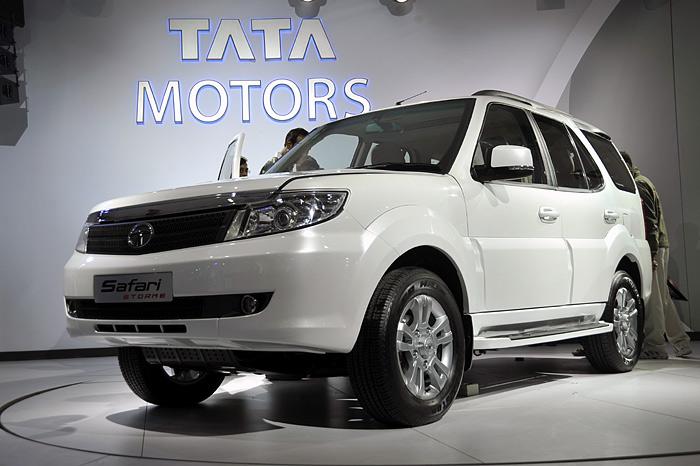
Test Drive and Review of New Safari Storme


new tata safari storme at the auto expo
Since Its launch 14 years ago at the 1998 Auto Expo, the Safari has soldiered on pretty much unchanged. Sure it’s had its fair share of upgrades – two engine upgrades, minor facelifts, more equipment – but it’s essentially remained the same under the skin. So, when the covers came off amid much fanfare at the Auto Expo, the first impression was one of huge disappointment. We were all expecting the new Safari to look, well… new. But sadly, the Storme’s looks are nothing more than a face lift, & it’s not a significantly more handsome one at that. More of the same wine, then?

new tata safari storme
Dig deeper though & you will find serious changes. In fact, the underpinnings are all new. The old Safari’s ladder frame chassis has been ditched for a shortened version of the same modern, ladder frame that underpins the Aria (codename: X2). A 200mm reduction from the Aria’s 2850mm wheelbase (the Storme has the identical 2650mm wheelbase of the older Safari) has actually helped in terms of torsional rigidity & weight. The hydroformed chassis of the Storme is 35kg lighter but at the same time a staggering 45 percent stiffer than the old Safari chassis.

new tata safari storme side view
Also improved is the suspension – gone is the old Safari’s torsion beam front end. It’s been replaced by the Aria’s double wishbone & MacPherson struts. Tata has tuned the dampers to suit the Storme’s characteristics. The steering gear is borrowed from the Aria as well & this, along with the 80mm wider track, has helped reduce the Safari’s massive 12m turning circle to a more manageable 10.8m.


new tata safari storme
People who actually head off road will be pleased to know the Storme 4x4 has a separate transfer case with low ratios & a shift on the fly system, like on the old Safari. Tata has wisely chosen not to go with the Aria’s more road biased full time four wheel drive system. Wrapping up the mechanical changes are calibration tweaks to the 2.2 litre DiCOR motor (power & torque are the same as before) to make it more responsive, & modifications to the G76 five speed manual (it is now called the G76 MkII) for better refinement. These improvements were first effected in the Aria & hence are a carry over to the Storme.

new tata safari storme steering and interior
The more obvious changes you can see for yourself. The big, squared off headlights of the old Safari give way to slimmer units housing projector lamps within. Nestled between them is a new, near vertical grey honeycomb grille, which gives the Storme a Land Rover like look. A chrome strip runs above it, livening things up. Completing the front look is the new bumper with a slim air dam which lends it a cleaner, fuss free appearance.


new tata safari storme engine view
However, changes to the front seem out of sync with the rest of the car & when you move to the side you will be hard pressed to notice  the new cladding & wider side footstep. The rear receives its fair share of changes as well. The twin chrome tipped exhausts add a bit of sportiness to the design, aided by the high mounted spoiler. The spare has been relocated to under the floor from the rear door & the door gets a chrome strip & a grey coloured band to liven things up. With all these changes to the design, the Safari retains its recognisable looks, yet appears more grown up, urban oriented & sportier. But, after 14 years, Tata should have given us nothing short of an all new design.

new tata safari storme rear spacing
The cabin however is completely new & quality has been improved as well. Compared to the current car, you could even call the Storme’s cabin plush, & it’s the beige coloured bits that really help in this regard. The plastics are similar in quality to the Aria & even slightly better in places. The new design dash gets a revised centre console with the air conditioner on top & the music system below. However, you only get a single DIN audio system! Why?


new tata safari storme front seating
The interiors too sport a clean look which is minimalist & mature. Fit & finish, which was the Safari’s bane in the past, has improved considerably and, unlike the previous versions which had uneven panel gaps, there is much less of it here. Although there still are a few uneven gaps in some places, the overall quality is at least a couple of notches higher.


Where the Safari excelled, & still does, is in passenger comfort levels. The sofa masquerading as a rear bench is still one of the best in the business at this price. With acres of legroom on offer, it is still a great place to kick back, relax & let the chauffer deal with the traffic. Even if you are the one driving, the firm front seats will keep you just as comfy & are perfect for those long highway drives. High seating affords a brilliant view of the proceedings ahead & looking down at the tiny hatchbacks from a high perch gives you the feeling of being invincible on the road. Making it easier to drive in the city is the steering system which is not overtly hard to turn at parking speeds & also returns more feedback on the move.

 Armed with a new chassis & now boasting a stiffer suspension, the Safari hasn’t lost the plush ride quality that was its hallmark. Its lighter weight & a firmer setup is obvious when taking on corners, with the Storme exhibiting better body control. The high stance & large dimensions mean it still rolls considerably, but it feels more stable.

new tata safari storme engine view
The 2.2 litre DiCOR engine makes the same 140bhp as before, but now feels more responsive. Keep the engine revving above the 1700 1800rpm mark, & you will be rewarded with brisk acceleration – brisk for its size, that is. We will, however, have to wait for a proper road test to find out how much quicker it has become. The gearbox the engine is mated to robs you somewhat of the driving pleasure. It isn’t the slickest or easiest to engage, though throws are relatively short & the clutch is lighter than some other SUVs we have experienced. Slowing down a vehicle of Safari’s size needs considerable braking force & the good news is that the Storme now comes with disc brakes all round & is equipped with ABS. Brake feel though reminds us of having stepped in wet mud. They feel spongy, but the Storme comes to a halt without too much drama.

While it may seem like Tata missed an opportunity in not equipping the Safari as lavishly as the Aria – which gets ESP, climate control & GPS navigation – it would have escalated the price considerably. Not something the buyers would have appreciated.

new tata safari storme at the expo rear view
The Safari started life more than a decade ago & over the years has found lots of loyalists. But with competition in the SUV space ratcheted up several notches with the arrival of the XUV500, is the Storme a case of too little too late? After 14 years, they should have brought out a new Safari, body & all.

What you do get is a more modern car under the old skin. So, if Tata manage to keep the price down because they’ve stuck with the old design, then fair enough. The Safari still has enough appeal in it to be attractive.


Fact File
Price Range (in lakhs)*
Ex-showroom price Rs 9-10 (estimated)
Engine
Fuel Diesel
Installation Front, longitudinal
Type 4-cyl, in-line, 2179cc, common-rail, turbo diesel
Bore/stroke 85.0/96.0mm
Power 140bhp at 4000rpm
Torque 32.63kgm at 1700-2700rpm
Transmission
Gearbox 5-speed manual
Dimensions
Length 4650mm
Width 1965mm
Height 1922mm
Wheel base 2650mm
Ground clearance 200mm
Chassis & Body
Tyres 235/70-R16
Suspension
Front Independent, double wishbone, coil springs
Rear non-independent, 5-link with coil springs
Brakes
Front Ventilated discs
Rear discs


Review and Test Drive of new Toyota Camry


new toyota camry
In the global scheme of things, the Camry is one of Toyota’s best selling models. It is seen as a sensible family car that is built to last an eternity. However, in India the Camry sells for its size & luxurious appeal. While the Toyota badge is a big draw for many, the lack of a diesel engine has always been the car’s Achilles’ heel. Moreover, being a CBU import, Camry prices have only risen over the years. Little wonder that Toyota has been unable to replicate the Camry’s global success here in India.

While a diesel engine would have immediately brought the Camry back into contention, the fact is Toyota simply doesn’t have the right engine for the job. So if the Camry is to sell with only a petrol engine, it had better cost less. & that is just what Toyota plans to do – reduce the price of the car by assembling it in India. It’s the car that you see on these pages that will be put on sale soon & we recently got to sample it on the outskirts of Delhi.

One glance at the new Camry & it instantly looks bigger & more substantial than the current car, despite the dimensions remaining pretty much the same. Toyota says every single bit of sheet metal is new & more than 90 percent of the parts have been reworked. So, in essence, the car is brand new, but the inescapable fact is it’s based on the same basic platform. Still, the car looks quite attractive & somewhat like a mini Lexus thanks to the angular headlights & big chrome grille. There is also a nice bulge on the bonnet that adds some character to frontal styling. View the Camry from the side & its upward sweeping beltline will catch your attention. The angular tail section is in keeping with modern design trends.

The resemblance to its Lexus brethren carries on in the cabin as well. The interiors are luxuriously appointed with a generous dose of faux wood & leather to have PETA go up in arms. Quality is improved from the earlier Camry but still not near the class benchmark.

new toyota camry interior view
The front seats are fully electrically adjustable to get that perfect driving position. What most owners though will be more interested in the rear seats which, we are happy to report, are exemplary in terms of thigh & back support. There is more space now & the neat thing is that the front passenger seat can be moved forward using buttons on the seat back. The buttons are within easy reach of the driver so that the fat cat in the back doesn’t have to move a muscle.

The Camry comes with a four-cylinder 2.5 litre petrol motor featuring Dual VVT-i & its 178bhp output is 11bhp up on the previous 2.4 litre unit. It’s matched to a six-speed automatic gearbox & we don’t expect a manual transmission to be offered when it is launched.

new toyota camry rear view
Push the start button & the motor fires up & settles into a barely audible idle. The engine is silky smooth & builds up revs effortlessly. Floor it & the box shifts down after a bit of contemplation & won’t shift up till the redline is reached at 6200rpm. There is also a manual triptronic mode if you want to play boy racer. If only it was in a sportier body; the luxury liner dimensions  of the Camry can’t be expected to handle like a speedboat, & it doesn’t. The Camry felt a bit firmer than before and, though it rolls when cornered, it feels under control & isn’t disconcerting. The steering is also a bit too light & lacks feel, especially at high speeds. The suspension flattens the minor bumps & absorbs broken tarmac, but the car we
drove came with 17-inch wheels, & a switch to 16 inchers & higher profile tyres should further improve the ride, which is not bad to begin with.

While it has never been the fastest or the best handling car in its segment, it is comfortable, luxurious & spacious. When it goes on sale later this year, it should be priced much closer to the competition thanks to CKD assembly, & Toyota has used its arch rival, the Honda Accord, as a benchmark. This may just be the real beginning of the India chapter in the success story that is the Toyota Camry.


Fact File
Price Range (in lakhs)*
Ex-showroom price Rs 23 lakh (est), (ex-showroom, Delhi)
Engine
Fuel Petrol
Installation Front, transverse
Type 4 cyls, in-line, 2494cc
Power 178bhp at 6000rpm
Torque 23.5kgm at 4100rpm
Transmission
Gearbox 6-speed, automatic
Dimensions
Length 4825mm
Width 1825mm
Height 1480mm
Wheel base 2775mm
Chassis & Body
Weight 1510-1540kg
Tyres 215/55 R17
Brakes
Front Ventilated discs
Rear discs

Test Drive and Review of New Mahindra Xylo E9

New Mahindra Xylo E9
What you’re looking at is a mid-life facelift of the Xylo & as you can see, there’s not much change to the basic shape. Still, the new look is easier on the eye  &  Mahindra has not messed with the Xylo’s strengths, which are its space, practicality  &  easy-to-use nature.


The changes are mostly limited to the front of the MUV – the new grille, the less pinched bonnet  &  altered headlamps make the Xylo more pleasant to look at. The chin also gets tiny extensions in the form of bolt-on plastic bits  &  a different bumper.

New Mahindra Xylo E9 side view
What makes this Xylo look a bit more upmarket are the black plastic wheel-arch extensions  &  there are chrome lined side mouldings. On top you see smart new roof rails  &  matte-black footboards. At the rear, the changes are few — the tail lamps are slightly altered, there’s a discreet spoiler  &  the D-pillar gets black stickering to give it a bit of fizz. So, a pretty standard facelift then.


The insides get a bit of a re-think too. While the dashboard is basically the same, it gets an equipment upgrade  &  this E9 version gets two-tone brown plastics. Mahindra also says that the door handles are now more robust  &  there's more space to stow cups  &  bottles. The seats on the E9 variant come are leather-upholstered, the gearlever is new  &  there’s a new take on the Xylo’s multi-information display. This one also gets steering-mounted audio controls  &  a unique voice command system that allows you to switch on the headlights, wipers  &  even change the radio station by merely voicing the command. It even pipes up if you leave a door ajar, mentioning which specific door you didn’t shut. And, unlike the Apple iPhone’s Siri, it understands the Indian accent quite well. The steering mounted switches also control the new cruise control feature.

Mechanically, the facelift is almost the same as the outgoing Xylo, except this E9 variant gets the 120bhp mHawk engine from the Scorpio. This engine comes mated to a new gearbox, the 5MT320. It uses detent pin technology  &  synchromesh even for reverse to smoother gearshifts  &  is still to debut on Scorpio. The layshaft bearings have also been changed for better efficiency.

All variants below the E9 stick with the 112bhp mEagle motor though,  &  the base versions still come with the taxi-spec m2DI CR motor. Apart from this Mahindra claims that the dampers have been tweaked too.

New Mahindra Xylo E9 interior view
On our extremely short drive, the Xylo felt much like the old one. It demonstrated a willingness to pull from low revs, was refined when not being pushed  &  felt adequately quick. The five-speed manual is a bit notchy though  &  takes a bit of effort to use, but feels like it will loosen up as the kilometres pile on.

The ride at low speed felt comfy enough though the car did tend to feel unwieldy if you pushed it harder. Our drive was short, so whether the recaliberated dampers  &  bushings for the suspension actually make a significant difference remains to be confirmed.

New Mahindra Xylo E9 rear view
Prices start at Rs 8.1 lakh for the E4 variant  &  go on to Rs 10.25 lakh for this top-end E9 version. Mahindra says prices if variants have gone up by a maximum of Rs15,000  &  in some cases a pruned equipment list on some mid range variants has caused prices to go down.

As is clear from the prices, Mahindra hasn’t messed with the Xylo’s biggest strength – its value. That it is much easier on the eye than before will only help the Xylo’s cause.


Fact File


Price Range (in lakhs)*
Ex-showroom priceRs 7.37 (base) to Rs 10.25 lakh (E9)
Engine
FuelDiesel
InstallationFront, Longitudinal, rear wheel drive
Type2.2-litre, 2.5-litre common-rail-diesel.
Power120bhp, 112bhp
Transmission
Type5-speed manual
Dimensions
Length4520mm
Width1850mm
Height1895mm
Ground clearance186mm
Chassis & Body
Weight1830kg
Tyres215/75 R15 Tubeless
Suspension
FrontIndependent, coil-springs, double wishbone type with Anti-roll bar
RearFive-Link, coil springs
Steering
TypePower-Assisted rack  &  pinion
Type of power assistHydraulic
Brakes
FrontVentilated Discs
RearDrums
Economy
Tank size55-litres

Twitter Delicious Facebook Digg Stumbleupon Favorites More